





Slot Volatility Explained: Why Big Wins Hurt Your Bankroll
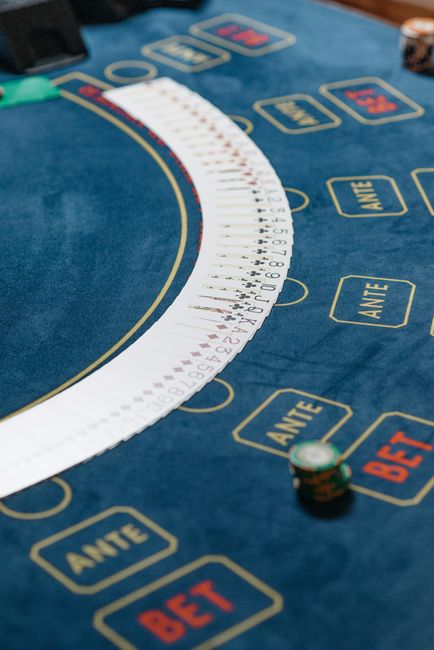
Every slot player has been there. You load a game, spin for twenty minutes, and watch your balance bleed away in tiny increments. Then you switch to another slot, hit a bonus within ten spins, and wonder why you wasted time on the first one. The difference usually isn't luck. It's volatility, and understanding it is probably the single most practical skill you can develop as a casino player.
Most players never look past the RTP percentage on the info screen. That's a mistake. RTP tells you what the game pays back over millions of spins, but volatility tells you how it pays back. Two slots with identical 96% RTP can feel completely different, and picking the wrong one for your bankroll is how sessions end in frustration rather than entertainment. For practical tips, check out สล็อตเว็บตรง.
What Volatility Actually Means
Volatility (sometimes called variance) describes the size and frequency of payouts. A low-volatility slot pays small amounts often. A high-volatility slot pays rarely but can produce massive wins. Neither is better in absolute terms. The right choice depends on your balance, your patience, and what you actually want from a session.
Here's a rough breakdown of how the three main categories behave:
- Low volatility: Frequent small wins, hit frequency often above 30%. Games like Starburst or classic 3-reel slots. Your bankroll lasts longer, but you won't see 1000x wins.
- Medium volatility: Balanced. Hit frequency around 20-30%, max wins in the 1000x-5000x range. Titles like Book of Dead sit roughly here.
- High volatility: Hit frequency can drop below 20%. Max wins reach 10,000x, 50,000x, even 100,000x in games like Money Train or some Big Time Gaming releases. Expect long dry spells.
One important nuance: volatility isn't always uniform within a game. Many modern slots have bonus buy features or escalating mechanics that change the variance profile depending on how you play. A base game might feel medium while the free spins round behaves like pure high variance.
Why High Volatility Wrecks Unprepared Bankrolls
Imagine you deposit $100 and play a high-volatility slot at $1 per spin. Statistically, you might go 150 spins without a meaningful hit. That's $150 gone before the bonus you were waiting for even has a chance to land. Players who don't understand variance blame the game, the casino, or the RNG. In reality, the math was always going to do that to a $100 bankroll on a 50,000x-max slot.
A useful rule of thumb: your session bankroll should be at least 100-200 times your average bet on medium volatility, and 200-300 times on high volatility. At $1 spins, that means $200-$300 minimum just to give yourself a realistic shot at triggering a feature.
Low-volatility slots are the opposite trap for a different player type. They'll grind you down slowly while convincing you you're "almost even." If you're a bonus hunter chasing wagering requirements, low volatility can actually help you survive longer, but your balance will inch downward predictably over time.
How Volatility Shows Up in Other iGaming Verticals
The volatility concept isn't unique to slots. It shows up everywhere in the iGaming ecosystem, and recognizing it helps across the board.
In blackjack and other table games, volatility is tied to the bet size and strategy. Flat betting at a $10 table is low variance. Martingale systems, ironically, convert low-variance games into high-variance gambles by escalating bet sizes after losses. It works until it violently doesn't.
In poker, variance frustrates even skilled players. A winning cash game player can lose twenty buy-ins over 50,000 hands through pure bad luck. Tournament poker is worse. Win rates are measured over thousands of events, and going deep in a big field is analogous to landing a high-volatility slot bonus.
In sports betting, a single bet on a -110 favorite is low variance. A 10-leg parlay paying 500/1 is pure slot machine energy. Same underlying concept, different packaging.
Practical Ways to Match Volatility to Your Situation
Before you open a game, run through a quick mental checklist:
- Check your session budget. If it's tight, stay in low or medium volatility territory.
- Set a target. Chasing a 5,000x win on $50 with $1 spins is fantasy. Scale your bet size down if you want big multipliers.
- Use the free play or demo mode. Most modern slots let you test 100-200 spins risk-free. What does the paytable actually look like?
- Look at the max win and bonus frequency. Reputable providers publish this. Kingmaker slots often advertise "max win: 25,000x" and "bonus buy: 100x bet."
- Walk away if a high-volatility game runs cold past its statistical norm. There's no "due" mechanic. Each spin is independent.
One more tip: many modern casinos let you set a loss limit per session or per day. Use it. Combined with a proper volatility choice, it's the difference between entertainment and damage.
The Mental Game: Why Players Misread Volatility
Human brains are pattern-seeking machines, which is exactly the wrong instinct for independent random events. Players remember the guy on the forum who hit a 50,000x win on a $0.20 spin, and forget the thousands of players who fed the same machine without a bonus. Survivorship bias is the enemy of rational bankroll management.
There's also a psychological cost to high volatility that doesn't show up in the RTP number. Long dead spins feel bad. They make you question your choices, tilt you into raising bets, or push you into a game you don't know. If you find yourself agitated after 20 minutes on a high-volatility slot, the game might be technically fair and mentally wrong for you.
The reverse is also true. Low-volatility lovers often feel bored, then switch to high volatility mid-session with an inconsistent bet size. You want to make the volatility decision before you start, not during a losing streak.
Final Thoughts
Volatility is the most underrated piece of context in iGaming. RTP tells you what happens over infinite spins; volatility tells you what happens to your money over the next 500. Players who internalize the difference stop blaming luck, choose games that fit their bankroll, and get far more entertainment value out of the same deposits.
Next time you open a slot, skip straight to the paytable overlay and check the max win and volatility rating. If it doesn't match your balance and your mood, pick another game. The math rewards that discipline more than any hot streak ever will.







A ramble around the disused chalk quarry reveals how industry and wildness have quietly learned to share the same ground.
The old wakes tradition blended grief, harvest, and mischief in a way that tells us a great deal about how our ancestors lived.
A slow walk along the chalk stream that feeds the valley reveals one of the most fragile and beautiful habitats in the region.
Three generations of shepherds on the chalk downs share what the old ways of grazing still teach us about the land.
The old railway line that once carried chalk and passengers through the valley is now a greenway, and its story is written in the landscape.