


The Ancient Yew of St. Mary's: A Thousand Years in the Churchyard
If you've ever walked past St. Mary's on a Sunday morning, or paused on the bench by the lychgate to catch your breath on the way up the hill, you've stood in the shade of something remarkable. The yew tree that dominates the eastern corner of the churchyard is older than the church itself — older, quite possibly, than any building still standing in Chalk Hill. Its trunk is a hollow, twisted thing, wide enough that three adults linking arms can just about circle it, and its branches spread out like a dark green cloud that never quite seems to thin, whatever the season.
Nobody knows exactly when it was planted, and anyone who claims otherwise is guessing. Yews are notoriously difficult to date — they grow slowly, and their heartwood rots away as they age, taking the evidence with it. What we do know is that yew trees were often planted in churchyards long before churches were built there, sometimes on sites that were already sacred. The tree may well have been standing when the first Saxon settlers cleared this hillside, and it was certainly here when the Normans laid the foundations of the nave in the twelfth century.
Why Yews Were Planted in Churchyards
The reasons are murkier than you might expect. The popular story — that yews were planted to supply wood for longbows — doesn't really hold up, since yew grows too slowly to be a practical crop and most English longbows were made from imported Spanish yew. A more likely explanation is that the yew's evergreen nature made it a symbol of eternal life, an appropriate companion for a place of burial. There's also the practical matter that yew is poisonous to most livestock, so a yew in the churchyard kept grazing animals away from the graves. Some historians point out that yews were often planted at parish boundaries as markers, and the churchyard simply grew up around them.
Whatever the original reason, the tree at St. Mary's has been part of the village's rhythm for as long as anyone can remember. Older residents recall playing hide-and-seek inside the hollow trunk as children in the 1950s, though the opening has narrowed since then as the tree has continued its slow, patient growth. The parish council fenced it off in the 1980s after a branch came down in a storm, and there's been an ongoing conversation ever since about how to care for something so old without hastening its end.
The Tree Today
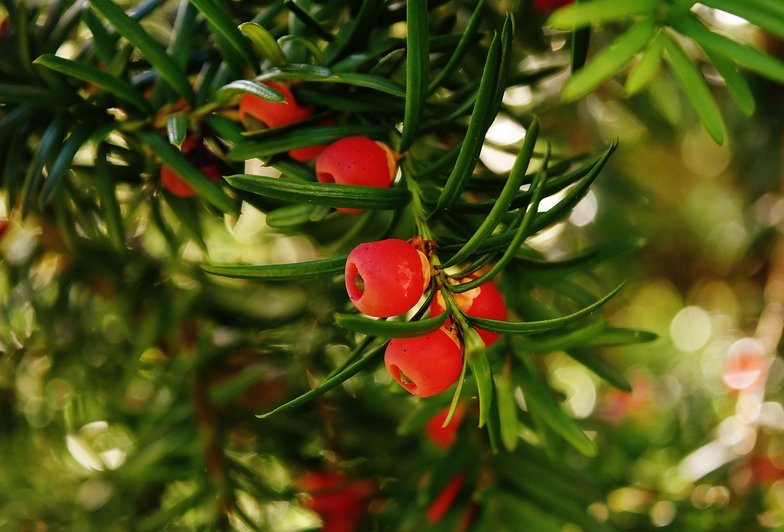
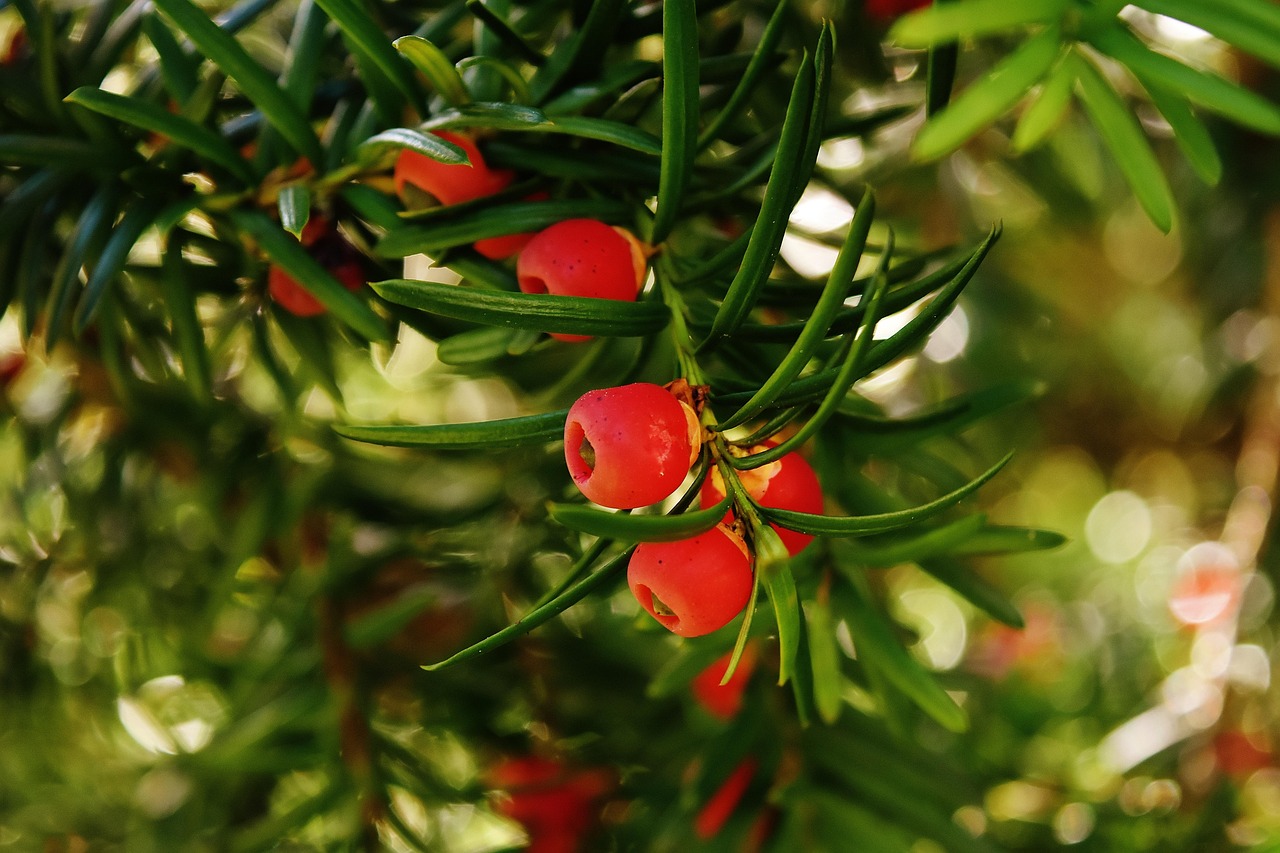
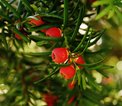
These days the yew is inspected every few years by a tree surgeon, who climbs up with ropes and a clipboard and reports back on the health of the canopy. So far, the news has been good. The tree is still putting on new growth each spring, and the red arils — the fleshy cups around the seeds, the only part of the plant that isn't toxic — appear reliably in autumn, drawing blackbirds and thrushes into the churchyard.
If you visit, take a moment to stand under it. Put your hand on the bark, which is reddish-brown and scaly and surprisingly warm on a sunny day. You are touching something that has outlived every person who ever worshipped in the church beside it, and will very likely outlive us all. There's a quiet comfort in that, and a reminder that Chalk Hill's story is longer than any single lifetime. The village has changed, and will change again, but the yew will keep growing, one slow ring at a time.

The sprawling yew tree beside St. Mary's churchyard has watched over the village for centuries, and its story is woven into the fabric of Chalk Hill life.
For two or three weeks each spring, the beech woods along the ridge above Chalk Hill turn violet, and there's no better time to walk the old drovers' path.
For nearly seventy years, the same family has been baking the same loaves in the same oven on Chalk Hill's high street, and the village wouldn't have it any other way.
The chalk downs may look empty in January, but winter reveals a landscape that's easier to read than any other season.
The village's morris side has been dancing for over a century, and its members remain cheerfully divided on almost everything except the dancing itself.